
What Makes Buyers Trust a Developer? A Complete Real Estate Guide
One of the most critical questions for buyers to ask when a developer is putting their own money into a piece of real estate is why they should trust the developer. Purchasing a residential plot is not just a monetary transaction. It is very often associated with a family’s future, a dream home, long-term savings, and a sense of security. A developer’s promises are backed by transparency, proper documentation, and development communication, thereby building trust from a buyer’s point of view.
The people who are buying a home are more interested in what’s behind the scene than what they see in the pictures. Has the project been approved by law? Do the documents make sense? Is the developer a reliable developer? Do the promised facilities exist, and are they being built? The answers to these questions can be critical to the buyer’s decision.
Why Trust Matters When Buying Property
Real estate is an expensive investment, and a person can invest a lot of money in a real property and/or land. As a result, trust can be as crucial a factor as price and location.
A buyer can make a comparison of multiple projects before deciding. Two projects may be similar in size and in location but may have a different developer that communicates well and gives verifiable information, which may build confidence.
This is understandable from the buyer’s point of view. No one wants to end up in a position of doubt after making such a significant investment.
Clear Legal Documentation Builds Confidence.
Transparency and clarity about legal documentation is one of the most important reasons for developer trust.
Ahead of buying a plot, buyers must request and confirm documentation and information as necessary and, wherever possible, independently. Depending on the project and applicable regulations, this may include:
- Project registration details
- Approval-related documents
- Land ownership documents
- Layout plan
- Development permissions
- Papers of sale and agreement
- Appropriate NOCs and authorizations
- Registration & payment paperwork
A developer should feel at ease discussing the documentation that is available and where buyers can check it.
Transparency is not just about displaying a document. It involves assisting the purchaser to understand the meaning of the document and promoting the correct verification of the document.
A Track Record Creates Confidence
The developer’s past projects can provide a lot to the buyer about the developer’s real estate development style.
Buyers may look at:
- Completed projects
- Ongoing projects
- Previous development quality
- Customer experiences
- Project locations
- Construction and infrastructure standards.
- Delivery history
- Evidence of a company presence/footprint and communication.
That’s why it’s important that the real estate developer’s reputation be good.
But people should not take promotional claims at face value. Going through projects that are finished or current can help you gain practical experience in the developer’s work.
Evaluation can be made more realistic by viewing roads, drainage, landscaping, boundary development, and other physical features.
Site Visits Make Trust More Personal
A website can be of service, but a visit in person can make a whole new world of difference.
When customers go to a project, they will be able to see the real environment, the road connectivity, the development of the neighborhood, and the overall condition of the project.
In my opinion, this is one of the most crucial steps in the property acquisition process. From that point, the images cannot capture everything about the space, and you begin seeing what you cannot capture in the pictures.
You might be wondering:
Could I picture what my future house will look like here?
What is the actual temperature of the surroundings?
How easy is it to get on and off the road?
Does the development agree with what was told me?
These observations can enable buyers to make a more informed decision.
Honest Communication Matters
Communication is another essential element to trust building.
A good developer would not shy away from challenging questions. Buyers can request information on pricing, possession dates, approvals, development process, maintenance, infrastructure, and project-related issues.
Clear communication can help avoid uncertainty, as opposed to giving vague answers.
If, for instance, a specific facility hasn’t been built yet, it is vital to make clear that fact.
It’s no secret how things are right now, and no secret how things will be in the future, and it will make a huge difference in buyer confidence.
Transparent Pricing Builds Trust
The price of a property can at times be confusing, as the advertised price might not be the full price.
Buyers should understand:
- Base plot price
- Registration expenses
- Development charges (if applicable)
- Maintenance charges
- Tax or government fees
- Other applicable costs
When the developer is transparent about the total cost of the development, it is easier for the buyers to plan their finances.
Economic transparency lessens stress for many families. No one wants to encounter extra costs and charges after signing a house contract.
Quality of Development Speaks for the Developer
Promises are significant, but sometimes physical development can say more.
At the time of a project viewing, buyers can view the quality of:
- Internal roads
- Drainage
- Street infrastructure
- Landscaping
- Electricity infrastructure
- Water-related facilities
- Boundary/security arrangements
- Common areas
- Overall maintenance
It is these details that can impact the buyer’s impression of the developer.
If a project is well designed, it can show the marketing audience that the builder is thinking more about the residents’ actual requirements than simply marketing.
Customer Experiences Can Influence Trust
It is human nature to ask other people about their experience.
Useful information may come from customer testimonials, real-life reviews, and completed projects. Customer testimonials, honest reviews, and finished projects can offer beneficial data. Customers should, however, read the reviews carefully but not take everything people say online as gospel.
While talking to the existing customer (when possible), buyers can gain insight into the following real-world considerations:
- Discussions with the developer
- Documentation process
- Site development
- After-sales support
- Overall experience
The purpose isn’t just to discover positive reviews. It’s for understanding the bigger picture of the customer experience.
A Professional Online Presence Helps.
The internet has become the new world of development, and a developer’s web presence can also create initial trust.
Ideally a professional website should have information that is clear about:
- Company background
- Projects
- Locations
- Contact details
- Where appropriate, approvals or registration information.
- Project updates
- Customer information
- Frequently asked questions
But a professional website is not absolute proof that all statements are true; it’s a source of information, a beginning point.
Nevertheless, customers should check key data from suitable official sources and documents.
Consistency Between Promise and Reality
Consistency is one of the best methods a developer can use to establish trust with the client.
When a project is promoted and offers some features, buyers are naturally expecting the development to offer those features.
This generates a simple rule:
The promise shall be made explicit and, if necessary, properly documented and be delivered realistically.
The consistency can build trust on the part of the buyer that goes beyond the lures of a good ad.
How Buyers Can Evaluate a Developer Before Buying
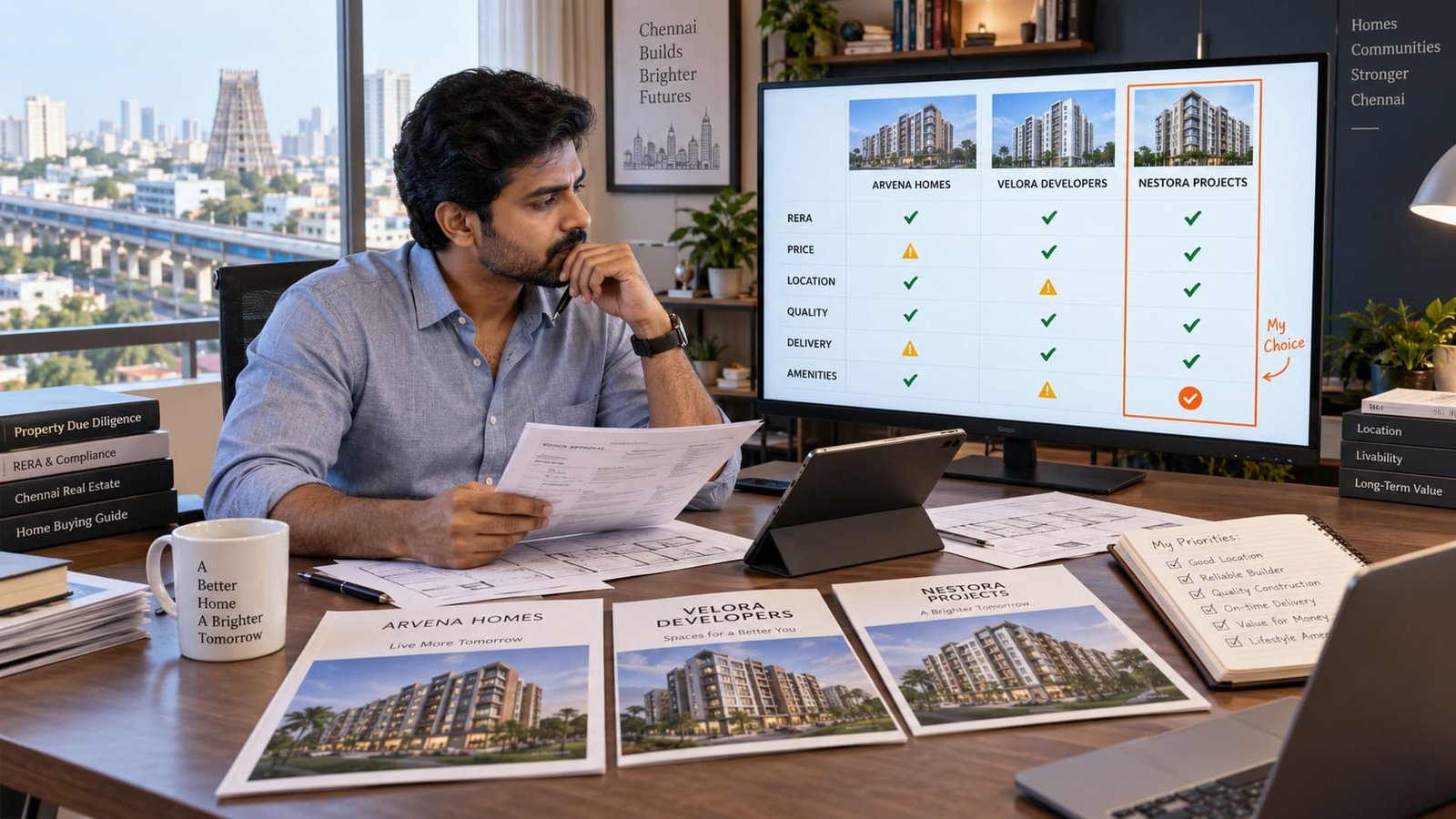
Buyers can make up a simple developer evaluation checklist before making a property decision:
- Check out the developer’s history.
- See past and existing projects.
- Check pertinent approval and registration information.
- Examine Land and Project Papers.
- Understand the complete cost.
- Inquire about schedules.
- Match expected features with what can be found on site.
- Talk to current customers, if possible.
- Assess the developer’s responsiveness and communication.
- Seek professional or legal counsel as appropriate.
This strategy enables buyers to substitute assumptions and claims with proof.
Trust Should Be Built on Verification
When you see a beautiful property, an attractive entrance, or a showcase of the property’s value, it’s only natural to feel emotional. However, feelings should go hand in hand with studies.
Making a project interesting with a good first impression. Supporting that impression may be achieved through transparent documentation, clear communication, and actual development.
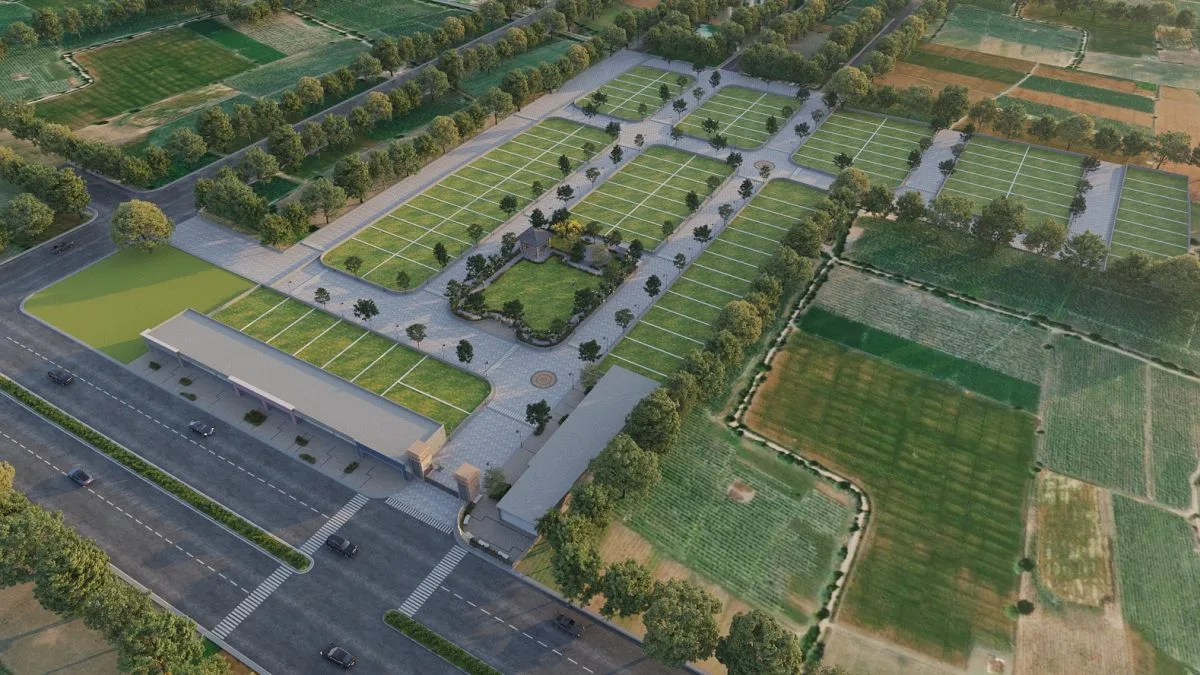
This is more crucial when purchasing residential plots in Jaipur, where buyers are likely to be mired in a number of options, including developers, project types, and locations.
The question isn’t just, “Do I like this developer?”
Actually, a better question is
What reasons would you give for why you are confident in this developer?
Final Thoughts
So, what makes buyers trust a developer? It’s not typically just one thing. The level of trust that is developed is a combination of transparent documentation, clear communication, development quality, customer experiences, professional behavior, and consistency between promises and reality.
It’s okay to ask questions as a buyer. The truth is that asking the right questions can actually keep you from making an emotional choice that you may not have enough information for.
The buying of a property should be an exciting process, but it should also be a feeling of being informed and secure. Unless you are in a hurry, check and double-check facts, explore the site, and assess how the developer does it in relation to facts presented rather than promises.
Buyers can make more informed decisions about their properties if they have the confidence to trust that the information is transparent and verified.