

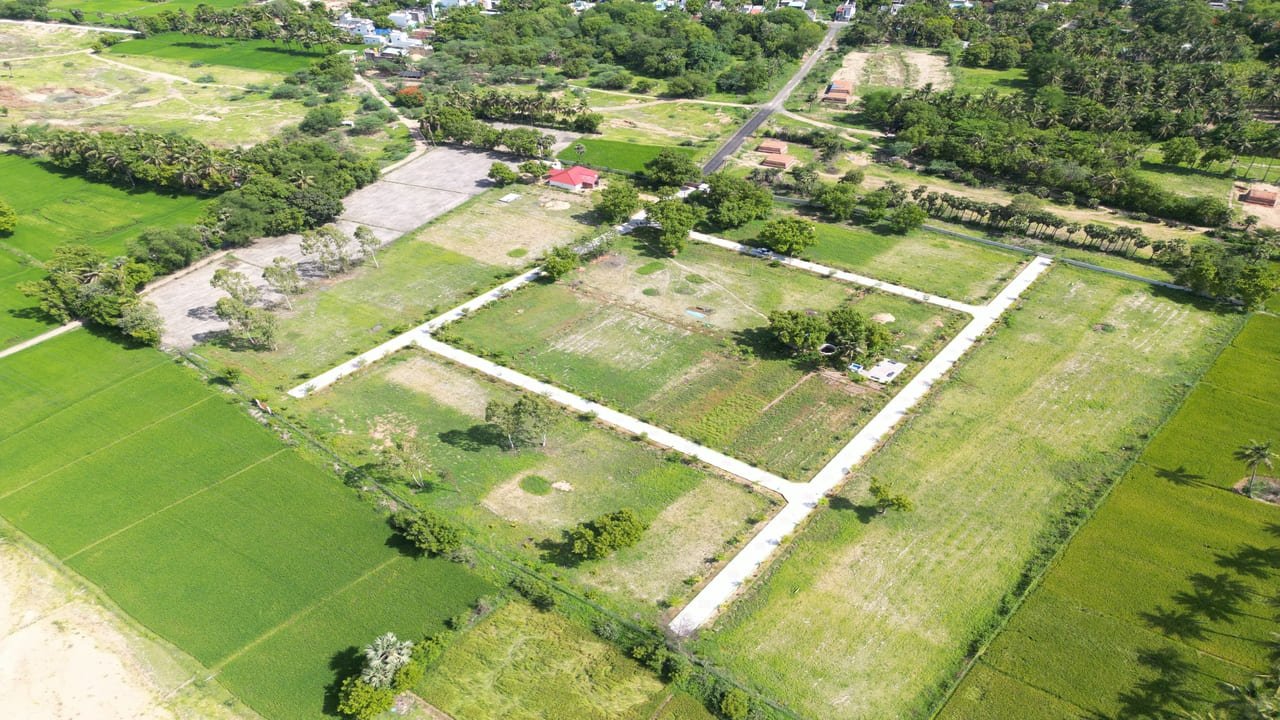
Best Investment Strategies for Residential Plots
The first thing I learned about investment in property is that purchasing a residential plot is not just a matter of locating the right land at a good price. The best investment strategies for Residential Plots and determine which strategy fits your budget, objectives, and risk tolerance. I recall the anticipation of seeing the various plots and how they might grow in value over the years. There was a tiny bit of risk with every purchase, too—what if I bought the wrong house or the price was too high? The lesson from that for me was that investing in a plot is not something that should be done in an emotional way; it’s something that requires patience, research, and a clear plan of action.
Having a well-defined investment plan can assist in an informed and practical decision for investors looking at buying residential plots in Jaipur or other cities that are witnessing rapid growth.
Why Residential Plots Can Be an Attractive Investment
There’s another element in residential properties that not many property investments can boast of: it is flexibility.
A plot may be able to be used to:
- Build a future home.
- Keep it as an investment for the long term.
- Build a home.
- When the market conditions are good, sell.
- Share with the next generation.
Additionally, cities are continually growing, and land is also scarce. Some areas may have higher demand as infrastructure and residential development expand into new areas.
But, just as with all things, there is no such thing as a guaranteed appreciation. Investment performance is affected by market conditions, location, infrastructure, legal status, demand, and purchase price.
1. Choose Your Investment Goal First
The first tip is to determine your investment reasons.
If you are purchasing a plot to:
- Build a home?
- Sell after several years?
- Create a long-term family asset?
- Diversify your investment portfolio?
- Keep land in place until an area grows?
The type of plot you can consider will depend on your objective.
In other words, a person who intends to construct a house in 3 years might prefer to choose an infrastructure that is relatively developed.
For long-term investors, an emerging neighborhood with viable growth prospects could be interesting.
It is easy to get sidetracked and lose sight of the ultimate objective without having a clear goal.
2. Location is More Important than Just Price
The key to profitable investment in residential plots is to choose a location based on the underlying fundamentals rather than price.
Consider:
- Road connectivity
- Major highways
- Ring roads
- Schools
- Hospitals
- Markets
- Employment hubs
- Public transportation
- Existing residential communities
- Future infrastructure
A cheap plot in an isolated location may not necessarily be a good investment.
Rather than saying, “How cheap is this plot?” you should ask:
Why is this plot sold at such a price, and what factors might increase the demand for it?
The answer to that question can lead to better investment decisions.
3. Make sure you know which emerging growth areas are available.
Investors may consider looking at areas that are under development but not necessarily developed for residential purposes.
It’s a relatively straightforward concept: invest before a space gets saturated, as long as the bottom line is right.
Identify evidence, including:
- New roads
- Residential projects
- Commercial development
- Educational institutions
- Healthcare facilities
- Improved connectivity
- Employment opportunities
These developing corridors like Vatika, Ajmer Road, Tonk Road, Ring Road, Sanganer, and other growing areas may be worth exploring for Jaipur investors.
Always do not assume that an entire corridor will perform the same. Assess individual site and location.
4. Compare Price Per Square Yard
Another crucial strategy is to compare properties on a common basis.
At first indication, rather than calculate the cost, make an estimation of the total price.
Price per square yard / square foot
Then make comparisons between similar plots in the same locality.
Consider differences in:
- Road width
- Corner location
- Plot dimensions
- Development level
- Connectivity
- Approvals
- Infrastructure
If the location and features are really good, it could be worth paying a little more for a plot.
5. Invest in Legally Clear Property
The one place when you don’t need to be cheap.
Check pertinent prior to investing:
- Ownership records
- Title documents
- Previous sale deeds
- Land-use status
- Applicable approvals
- Plot boundaries
- Encumbrance-related records
- Seller’s authority to sell
Complicated documentation can be very valuable in a property’s case when independent legal advice is given.
Having an excellent appreciation plot is no guarantee it will be a good investment if the title and/or ownership issues present any legal issues.
6. Don’t Ignore Infrastructure
The quality of the infrastructure will have a significant impact on the residential ‘sellability’ of an area.
Look at and assess infrastructure like
- Roads
- Water
- Electricity
- Drainage
- Street lighting
- Public transportation
- Schools
- Hospitals
- Commercial areas
Exercise caution in predicting future infrastructure.
The proposed road or a future project could take more time than anticipated—or even change completely.
Use information that you have proof of, and not promises, to determine your investment choice.
7. Consider a Long-Term Holding Strategy
Investors who can be patient are better suited to residential land.
Do not think of instant gains; think a few years.
The area can experience:
- Population growth
- New construction
- Better roads
- Commercial development
- Improved connectivity
- Increasing housing demand
Just don’t forget that all plots are not created equal, however.
The base site needs to have a true demand potential.
8. Consider Buying Before Major Development—Carefully
When there are solid fundamentals, an early entry move can prove to be effective.
Before a lot matures, you can find a location at a lower price if you identify it.
However, the earlier investment also involves more uncertainties.
Before buying, ask:
- Is development taking place?
- Are roads accessible?
- Do they have a need for your product?
- Is there any work nearby that is moving forward?
- Does the property have a clear chain of title?
- Do the proposed infrastructure projects seem plausible?
Early is not necessarily good.
The intent is to find a developing area, not just an area where development is being promised.
9. Diversify Your Real Estate Exposure
Buying another similar property could also result in a higher concentration risk if its entire wealth is already invested in a single property.
Consider your overall financial situation before making a large investment.
Real estate is not quite as fluid as certain financial assets, not to mention some equity funds, and it may not be easy to sell or find a buyer willing to pay your asking price.
It is more practical to have a balanced investment strategy rather than investing all your savings in one plot.
10. Don’t Overstretch Your Budget
Some of the most emotional errors investors make is becoming emotionally attached to a property that they can’t afford.
A lovely corner lot in a good location can be enticing.
However, if the purchase will entail too much debt or will deprive them of any financial cushion, the investment can turn out to be a problem.
Calculate:
- Down payment
- Loan repayment
- Registration costs
- Tax and applicable charges
- Development costs
- Emergency reserves
The most successful investment is an investment that is easy to hold.
11. Use Site Visits as Part of Your Strategy
Avoid assuming the information found in brochures, on websites, or in sales presentations is comprehensive.
Go to the site.
As you visit:
- Actual road access
- Surrounding properties
- Construction activity
- Neighborhood quality
- Electricity
- Water
- Drainage
- Distance to key facilities
This is one of the most valuable aspects of owning real estate, I believe. If you visit a plot in person, you will see things that cannot be captured on a photograph. You can see the actual development level and whether or not you can envision people residing there.
This individual experience can be a real clarity to your final choice.
12. Have an Exit Strategy
When purchasing a plot, consider how you will get out of the investment.
Some ideas for exiting include:
- After development the sale price will be determined.
- After achieving a target price, sell the stock.
- Building a home
- Constructing a property
- Having the land as a family inheritance
When you’re already aware of the potential exit plan, you can decide whether or not the property has the attributes you’re looking for as an investment.
Common Mistakes to Avoid
Buying Because Everyone Else Is Buying
Like anything, popularity doesn’t always lead to appreciation.
Only the price is considered.
A low price may sometimes be a sign of inadequate location or demand.
Ignoring Legal Verification
Always check ownership and applicable documents.
Depending on Future Promises
Evaluate infrastructure and development claims.
Expecting Guaranteed Returns
The return on real estate properties is not guaranteed.
Buying something and never selling it.
Be aware of any future uses of the property.
Residential Plot Investment Checklist
Before investing, ask:
- What is my investment objective?
- Is the location suitable for that objective?
- Have I compared similar plot prices?
- Is the property legally clear?
- Have I verified ownership and title?
- Are applicable approvals confirmed?
- Have I visited the actual site?
- Is infrastructure available or independently verifiable?
- Can I comfortably afford the investment?
- What is my expected holding period?
- What is my potential exit strategy?
Final Thoughts
The top investment ideas for residential lots aren’t necessarily about discovering a one-time investment opportunity or about timing the market so it’s always the right time to buy.
They are more about the making of disciplined decisions.
Decide on your goal first. Research the location. Compare prices. Verify legal documents. Understand infrastructure. Visit the site. Also, stay within your budget and consider what you hope to get out of the transaction.
Above all, have patience.
I know how and why people can become attached to property. A plot can be so much more than a mere investment. This can be a dream house, a solid financial investment, a family inheritance, or a lifetime of effort. That emotional bond is very nice, but never a substitute for due diligence.
The best idea is to make it based on research and emotion-based vision.
Once you have selected the right location, the documentation is clear, the price is not too high, and you have your investment plans for the long term, a residential plot can be a significant addition to your property portfolio.
Make investments today that will lead to your goal tomorrow.