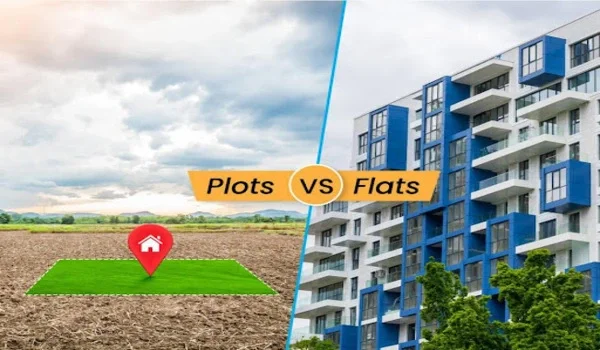

Residential Plot vs. Agricultural Land: Which Investment is Better?
The dream of owning land has always been in my family. Several years ago we had saved enough money to invest in property, but we had to make a tough decision: whether to purchase a residential plot or agricultural land. The farm was quite large and moderately priced, and the house was in a growing community with improved roads and other facilities. We have been researching legal rules, speaking with real estate professionals, and visiting both properties for weeks. It was a learning experience for us to understand that it is not only about the price of Residential Plot vs Agricultural Land, rather it is about the purpose, long term goals, legal requirements and future returns. Our choice enabled us to gain confidence and peace of mind, and so do we hope this guide will help you choose the right one for you.
It is very important to know the difference between residential plots and agricultural land, especially if you are a first-time real estate investor or just a savvy investor.
What is a residential plot?
A residential plot is one area of land that has been licensed for residential development by the local development authority.
It will be used for construction:
- Independent houses
- Villas
- Duplex homes
- Dwelling units (where allowed)
The house sites are generally situated in zoned sites and are provided with basic infrastructure.
What is meant by the term “agricultural land”?
The land used for agriculture is mainly set aside for farming and agricultural operations, including:
- Crop cultivation
- Horticulture
- Dairy farming
- Organic farming
- Plantation
Typically, the conversion of agricultural land to dwelling use is limited, subject to the applicable land use conversion provisions in the various laws.
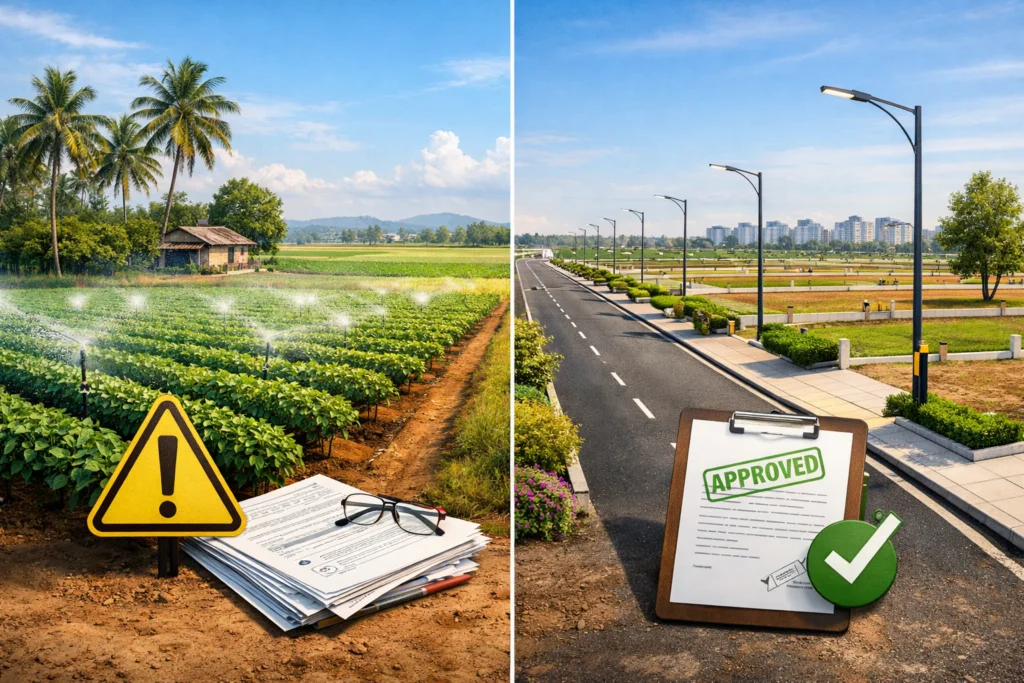
1. Legal Approvals
The most striking difference is the legal use.
Plots of land are approved for residential use.
Agricultural land is intended for agricultural use.
Always remember that when purchasing farmland:
- Land-use restrictions
- Conversion rules
- Local government regulations
- Ownership records
Investment verification is a must for both types of investments.
2. Infrastructure Availability
Typically, residential lots come with or are close to:
- Roads
- Electricity
- Water supply
- Drainage
- Street lighting
- Schools
- Hospitals
In rural areas, agricultural areas may be lacking in infrastructure.
The usability and future appreciation are greatly influenced by the infrastructure.
3. Investment Returns
Growing urban and suburban markets frequently offer faster-appreciation residential plots because of rising housing demand.
Appreciation is also possible for agricultural land, especially when infrastructure developments are planned nearby or land-use decisions are made that affect the value of the land.
Return is the biggest determinant of location.
4. Construction Possibilities
Residential plots are for residential development based on local building regulations.
Residential development typically is not permitted on agricultural land, with the exception of obtaining necessary approvals or land-use conversion (where legal).
Check the relevant regulations before making plans for construction.
5. Liquidity
Homes tend to sell more quickly than residential lots, since the demand for both homebuyers and investors is more wide-ranging.
The time required to sell agricultural land can be longer if:
- Location
- Buyer eligibility
- Local demand
- Land size
Residential plots can offer more liquidity if you need to sell them rapidly.
6. Financing Options
Loans for sanctioned residential plots are often given by banks, as per the bank lending policy.
Depending on the local regulations, borrower eligibility, and lender requirements, the cost of financing agricultural land can vary.
When buying, always shop around for the best loan.
7. Maintenance Requirements
In most cases residential plots do not need much maintenance until the building starts.
Long-term care and maintenance of agricultural land can involve:
- Boundary protection
- Weed control
- Soil care
- Irrigation (if farming)
The maintenance task should be taken into consideration before investing.
8. Risk Factors
Residential Plot Risks
- Buying unapproved layouts
- Legal documentation issues
- Speculative or overpaying in markets
Agricultural Land Risks
- Land-use restrictions
- Conversion challenges
- Water availability
- Farming-related uncertainties
Due diligence minimizes investment risk.
Which investment strategy is more profitable?
Choose a Residential Plot if you:
- Have a house-building project in mind.
- Want easier financing.
- Prefer higher liquidity.
- Inquire for long-term appreciation of urban development.
If you do any of the following, select Agricultural Land:
- Intend to pursue agricultural activities.
- Understand local regulations.
- Have a longer time horizon and are okay with risks associated with a particular location.
There is no single best answer; you need to choose the right one based on your objectives.
Before purchasing any land, here are some tips to keep in mind.
Prior to your investment:
- Check the title deed.
- Check ownership records.
- Confirm government approvals.
- Make a house visit.
- Check zoning and/or land use status.
- Know next steps for infrastructure.
- When necessary, seek legal advice from a professional.
Thoroughly researched assures your finances and your sanity.
Final Thoughts
In retrospect, our family understood that the most important investment was not the smaller or larger parcel of land; it was the one that was right for our future. We were looking to find a place where we could live at some point in the future, where we wouldn’t have to deal with legal uncertainty, and where we could benefit from the development of infrastructure. The clarity made all the difference that day.
There is no one-size-fits-all solution to the issue of residential plots vs. agricultural land. The choice of land use, whether residential or agricultural, is more suitable to the home buyer and some long-term urban investors, but may be better for some long-term agricultural investors or the land already being used for agricultural purposes. The best way to make a good decision is to understand the legal structure, infrastructure, funding, and your own goals.
Invest smartly, check all documents, and invest in the land that fits your vision for the future, not your excitement for the moment.
Frequently asked questions (FAQs)
1. Which is better: a residential plot or agricultural land?
This depends on your objectives. The residential plots are normally suitable for house construction and urban investment, and the agricultural land is mainly used for agricultural activities.
2. Can I build a house on agricultural land?
In many areas, agricultural land use for residential development is subject to local legislation and may need to be converted to land use and/or approved by other authorities. Please review the appropriate regulations before buying.
3. Which investment will generate a higher profit?
Many factors, such as location, infrastructure, legal status, and market demand, influence returns. The urban development value of well- located residential plots may also appreciate, and, under certain conditions, agricultural land may also appreciate.
4. Is it easier to obtain a loan for residential land?
There are a lot of lenders that provide loan facilities for the approved residential plots. Loan availability for farmland will be based on local rules and policies of individual lenders.
5. What documents do I need to check before purchasing land?
Before investing, check the title deed, ownership documents, necessary approvals, Encumbrance Certificate, land use, and any other relevant legal paperwork.