
How to Compare Two Plot Projects: A Complete Buyer’s Guide
If you plan on purchasing land, it is essential that you understand how to compare two plot projects. You can see brochures for two projects that are like or may even be similar in size and price but vastly different in value. When it comes to a buyer’s eyes, I think that picking a plot based on the fact that it’s a very appealing price tag should never be a basis for picking a plot while merely taking in the gorgeous attributes. It should be finding a home that would be comfortable in the here and now and would still be comfortable in the future.
Why Should You Compare Two Plot Projects?
Purchase of a plot is a significant investment.
For many families, it is a years-long deposit and the possibility of someday owning a home. It can be a long-term investment for investors.
For this reason, it is important to carefully compare 2 projects.
Instead of asking:
“Which project is more successful?”
Ask:
“Which project is a better all-around value for me?”
Just one shift in perspective can help you avoid getting drawn in by ads and concentrate on the real details.
1. Compare the Location
One of the top factors to compare is location.
Look at the exact location of both projects and consider:
- Access to key roads.
- Distance from important city areas
- Nearby schools
- Hospitals
- Markets
- Employment hubs
- Public transport
- Existing residential development
Do not compare sites on the basis of names.
A project can be marketed as being in a developing area but in reality have differing levels of accessibility.
Ideally, make two trips to both of these and inspect the area around them.
2. Check Legal Approvals and Documents
Before comparing prices or amenities, compare the documentation.
For a specific project and within the specific regulatory context, a buyer may be required to check relevant approvals, registration, title, and land matters.
Ask both developers for the applicable documentation and verify important information independently.
If documentation causes uncertainty, it doesn’t necessarily make an attractive project a better choice.
One of the biggest aspects of property comparison that is important for me is the paperwork, as it may not seem very interesting, but that can definitely give you some kick when you are investing your hard-earned cash.
3. Compare Plot Sizes and Dimensions
Do not compare plots on the basis of the total area.
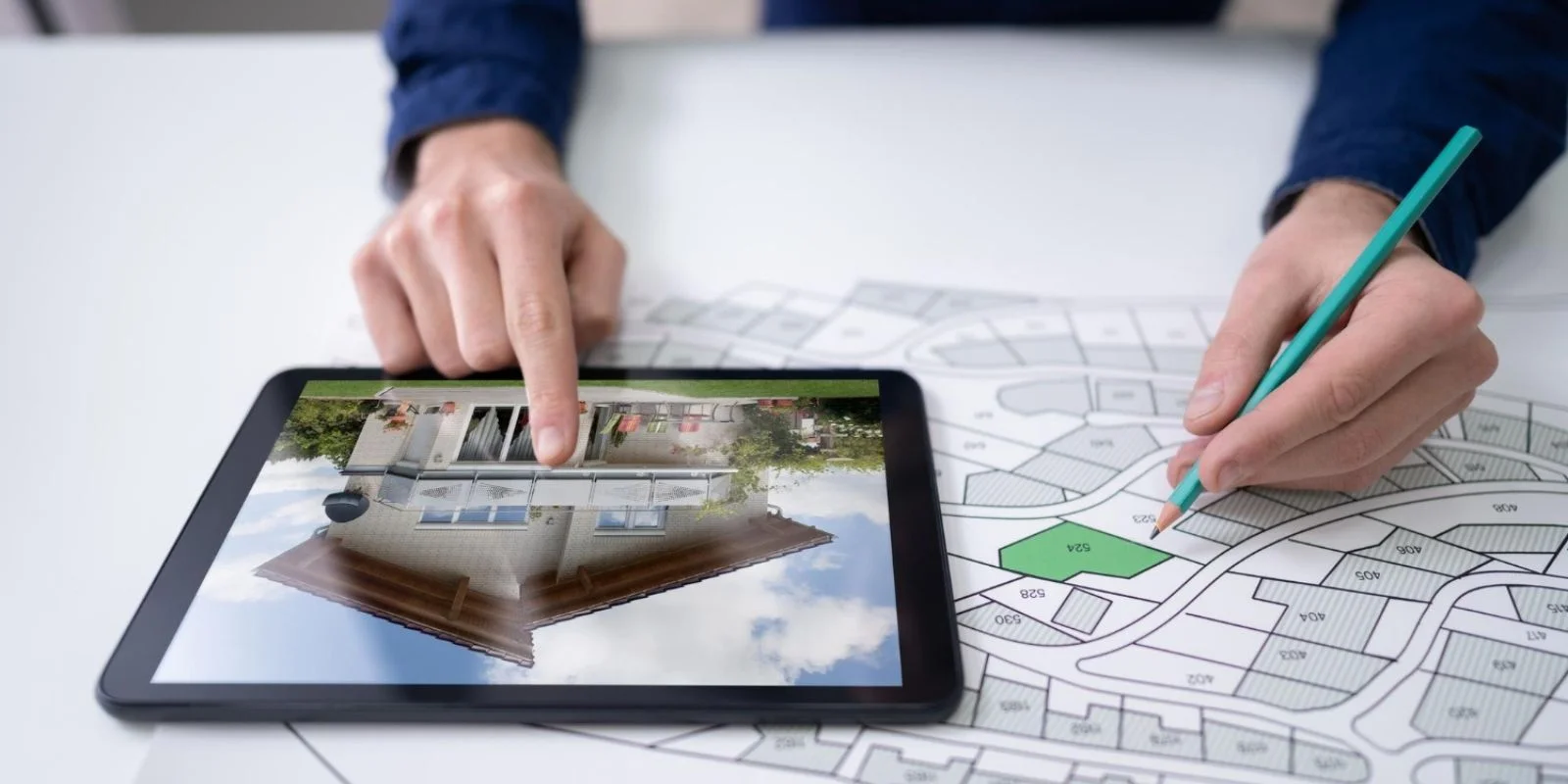
Take a look at real measurements.
For instance, two plots can be the same size (sq ft), but one might have a better frontage and depth.
Check:
- Plot area
- Frontage
- Depth
- Shape
- Road-facing position
- Corner position
- Construction possibilities
Consider what you may be planning to eventually build on the plot.
When designing the layout of a potential future home, a practical plot can offer you the flexibility you need.
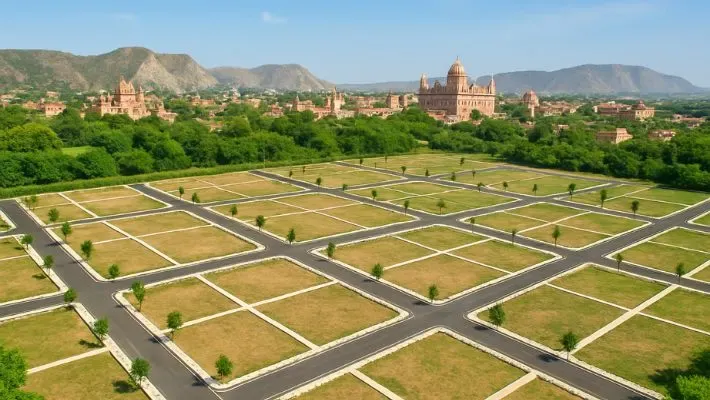
4. Compare Road Width and Accessibility
Roads are another important comparison factor.
Inspect internal roads and approach roads.
Ask:
- What is the width of the principal road?
- What is the width of the internal roads?
- Does the road have an adequate paved width?
- Are there spaces for easy getting in and out of the vehicle?
- Are the primary road connections to the project readily accessible?
On paper, a property can be a great deal, but if there is a bad approach, it can impact everyday convenience and buyer interest in the future.
Things that a brochure can’t tell you can be seen on a visit to the physical site.
5. Compare Amenities Based on Usefulness
A lot of projects boast a lengthy list of facilities.
Avoid just counting them!
Rather, ask them how helpful they are.
Compare things such as
- Parks
- Green spaces
- Street lighting
- Security
- Community areas
- Drainage
- Water infrastructure
- Electricity
- Walking areas
- Children’s spaces
Just because you have 20 amenities doesn’t make it better than 10.
Practical, available, and suitable to the intended residents is what’s important with respect to infrastructure.
6. Compare the Developer’s Reputation
The other crucial component of the comparison is the developer.
Check out their past work and performance.
You can consider:
- Previous developments
- Quality of completed projects
- Customer experiences
- Project delivery
- Documentation practices
- Transparency
- After-sales support
Effort to not focus on marketing jargon.
If feasible, view completed projects and talk with current property owners.
This can help you have a better idea of what the developer actually provides.
7. Compare the Total Cost, Not Just the Plot Price
One of the most frequent errors is making only price-per-square-yard comparisons.
Rather, find the total cost.
Consider:
- Base plot price
- Registration-related expenses
- Development charges
- Maintenance charges
- Infrastructure charges
- Any tax or fee that may apply will be included.
- Other transaction costs
It’s possible to save money on a project at first but then end up spending more in the end.
This is where it’s important to do the math correctly or else there will be a rude shock.
8. Compare the Surrounding Development
Extend beyond the scope of the project.
Your neighborhood can make a big difference as an owner.
Compare:
- Existing homes
- Nearby commercial activity
- Roads
- Schools
- Healthcare facilities
- Green spaces
- Public infrastructure
- Future development
Every project can be within an existing neighborhood or mostly on undeveloped land.
Both are not necessarily good or bad but are different investment factors.
9. Compare Future Potential Carefully
Development is an essential component of property marketing that is frequently a significant aspect of future development.
May be informed of upcoming roads, commercial centers, schools, or other infrastructure.
But do not go on the basis of promises only.
In an effort to tell apart:
Existing development
and
Planning for or intended development.
Check out key points when sources are available.
Opportunities for future growth are possible, but not assured. A smart comparison takes into account what’s there now but also what might be in the future.
10. Compare Resale Potential
While you may not be looking to sell your home, it is important to consider resale when you’re thinking about building a home.
Ask yourself:
Which project would you expect to have more interest in if you were thinking about selling this plot sometime in the future?
Consider:
- Location
- Connectivity
- Documentation
- Plot usability
- Development
- Amenities
- Neighborhood
- Demand
- Price
A project that resonates with the true user can have a more expansive prospective customer base.
Don’t Ignore Your Emotional Connection
Price isn’t simply a number.
A plot is a future home for many people.
You can stand in an empty lot and visualize your home, your family in the garden, your children playing in the street, or having quiet evenings at the end of a long day.
That feeling matters.
However, emotions should complement practical research, not supersede it.
The best property decisions that I make are when I like the place and the research backs me up.
Final Thoughts
It’s all about seeing the big picture when it comes to comparing two plot projects.
Avoid looking at the price of projects as your sole criterion.
Look at where they are, how they are connected, how they are documented, the dimensions of the plot, the roads, amenities, the developer’s reputation, the overall cost, the development around them, any potential for the future, and resale.
Take your time. Visit both projects. Ask questions. Check documents. Talk with individuals that have prior experience with the developer.
A plot is more than just a piece of land. It could be an investment for one buyer. Otherwise, it can turn out to be a family house. The key is to make the right comparison, which involves financial considerations as well as emotional ones.
Once you’ve made the decision, you should feel that you are not just purchasing something that is trendy right now but something that is beneficial to your future.